What is Gamification?
How points, badges, and leaderboards are bringing in billions in revenue and changing how we work and learn.
Dec 11, 2025
Gamification is an increasingly popular strategy that involves applying game design elements and principles to non-game scenarios. Gamification is far beyond adding points and badges. At its core, it focuses on leveraging the psychological triggers that make games engaging and using them to motivate behavior, solve problems, and promote learning. It transforms mundane or challenging tasks into activities people are more motivated to complete.
How Does Gamification Work?
It works by tapping into fundamental human desires, such as the need for achievement, status, competition, and self-expression. It achieves this through a structured system of mechanics, which include:
Points: Quantitative measures of success for completing a certain task.
Achievements: Rewards that indicate the mastery of a specific skill or completion of a major milestone.
Leaderboards: Public rankings that appeal to the need for social status and friendly competition.
Progress Bars: Visual tools that show how close a user is to completing a task or earning a reward, driving persistence.
Quests: Structured goals with defined rewards, which help with the visualization of certain activities.
Avatars and Customization: Allows users to personalize their experience, and develop a sense of identity.
Sectors Seeing the Most Impact
Gamification has an impact on multiple industries, with retail holding the largest market share, which generates more than 28% of the current market revenue. In education, through using gamified learning tools, student performances have increased to 30% in various academic settings, as well as a rise in motivation and engagement. Fitness apps and wellness programs that embraced gamification have seen a rise of user retention up to 50% in comparison to companies that use traditional methods. In HR, gamified training programs are proven to be highly effective, increasing user engagement up to 60% which contributes to the increase of workplace productivity.
Benefits of Gamification
The popularity of gamification is driven by its powerful ability to harness basic human psychology to achieve measurable goals. It provides a more effective approach than traditional methods by using:
Motivation and Dopamine Release: The use of game design principles through badges and achievements triggers a release of dopamine in the brain. This creates a positive reinforcement loop that encourages users to continue the desired action.
Visible Progress: Elements like progress bars and levels help with making the goal clear. Through the visualization of a certain task, the goal becomes clearer and reachable. This prevents discouragement, and helps users stay on the right track.
Active Learning: Unlike the use of passive methods , gamified tasks require users to actively participate, experiment, and solve different problems, which lead to much better retention and understanding through active recall.
Social Engagement: By using features like leaderboards and team challenges, mundane tasks turn into group activities that create a sense of unity and mutual empowerment.
Lesser Overload and Reduced Pressure: Breaking large, and complex goals into small, manageable pieces, reduces the feeling of being overwhelmed and makes daunting tasks seem more achievable and less intimidating for users.
Case Studies and Their Impact
Plecto is a performance management tool that visualizes business metrics from sources like Salesforce and HubSpot, that use gamification techniques like leaderboards, badges, contests, and notifications to motivate sales and support teams. Today, Plecto can be found in over 75 countries and earns an estimated $7.8 million in annual revenue, demonstrating how gamified analytics can expand into a commercial success.

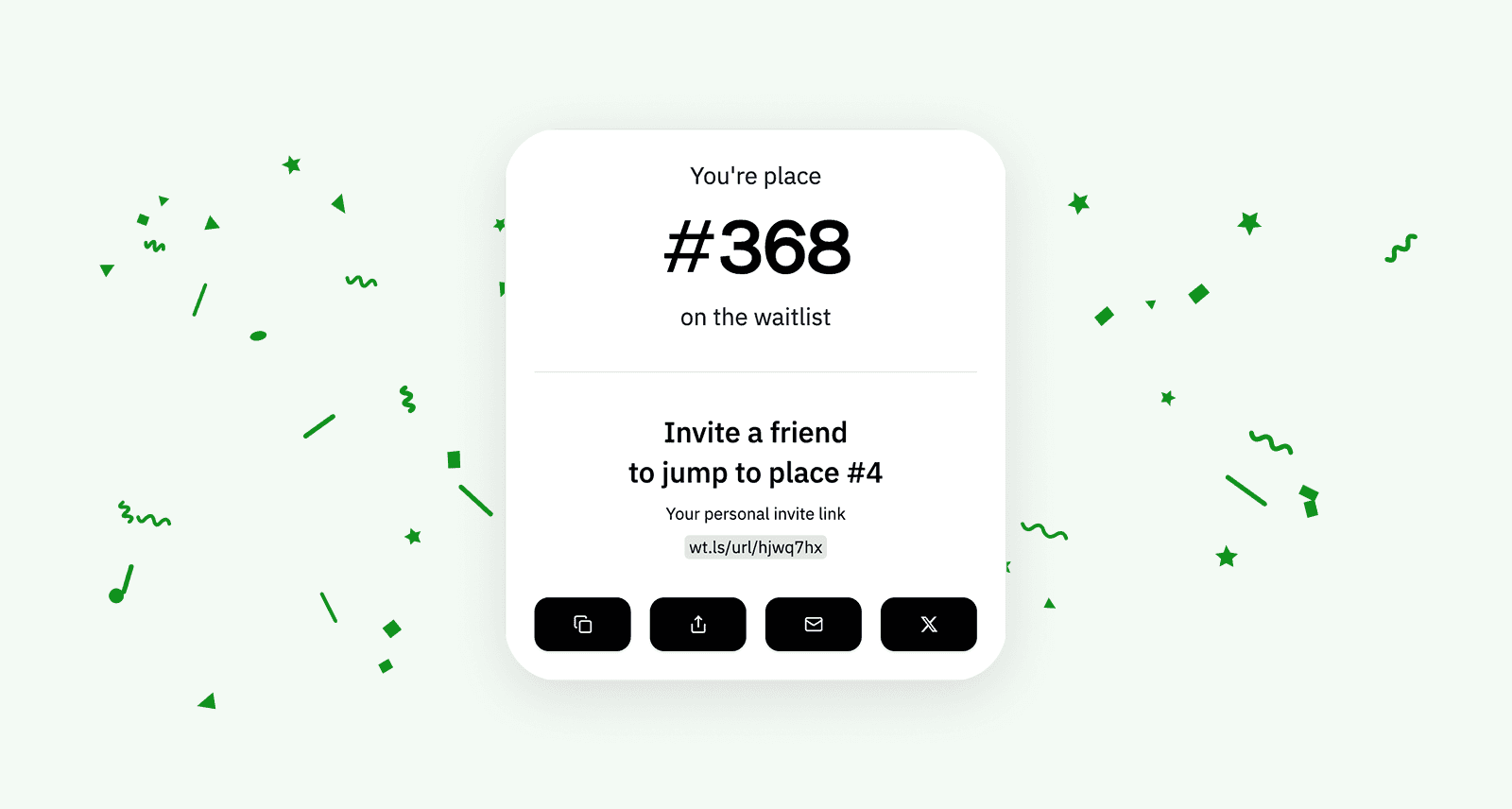
Robinhood uses celebratory confetti and visually engaging animations after a successful completion of a trade. It gives achievement badges, and has a waiting list system that gamifies the sign-up process. Since its 2013 launch, Robinhood has grown into a massive success story, boasting over 25 million funded accounts and generating more than $2.9 billion in annual revenue
Duolingo is one of the most popular examples of utilizing gamification mechanisms. It's a free language-learning app that gamifies education with XP points, daily streaks, and leaderboards that help to form habits. Duolingo has achieved extraordinary success, surpassing 100 million monthly active users and generating over $700 million in annual revenue by 2025.
Habitica is an RPG-style habit tracker, where after completing a task it levels up your character, earns you gold for gear, and includes party quests that you can do with friends. Habitica has grown into a thriving success story that helps millions of people worldwide create habits and brings in a substantial amount of revenue via in-app purchases and premium subscriptions.
Strava is a fitness app for tracking and sharing activities like running, cycling, hiking, and swimming. It has a leaderboard for friendly competition, and gives badges for completing certain activities. Since its 2009 launch, Strava has gained over 100 million members and generated $275 million in revenue from premium subscriptions, making it a huge success in the fitness gamification space.
Limitations of Gamification
While gamification can only enhance a process, it cannot fix a fundamentally flawed product or service. Adding badges to a confusing platform only results in engaged users who are confused or frustrated. The value proposition must be strong enough to sustain interest once the initial rush of trying out a new product runs out.
The biggest challenge in gamification is preventing Game Fatigue. While extrinsic rewards drive initial adoption, their retention requires shifting to intrinsic motivation. This is one of the most challenging aspects of gamification - the retention of users. It’s easy to make users try something new, but the hard part is keeping them satisfied to keep using it. This is achieved by continually introducing novel challenges, personalizing their accomplishments, and using competitive elements to keep the experience fresh and engaging.
The Future of Gamification
Gamification is evolving past the point of using badges and achievements, it's becoming a sophisticated strategy integrated with cutting-edge technology. It has shown that it's more than just a trend, and that it's a powerful tool for keeping users engaged and satisfied. When tasks become meaningful, and the path to completion is clear, people are more motivated to learn, achieve, and stay engaged. The next generation of gamification will likely focus on building a stronger sense of community, embracing teamwork, and will focus on user personalization of quests and achievements.
The future will focus heavily on social gamification, where challenges and rewards are linked to team performance and community contributions, rather than just individual rewards. This creates stronger user loyalty and network effects.
We help companies build referral and gamification campaigns at scale. Sign up here.